

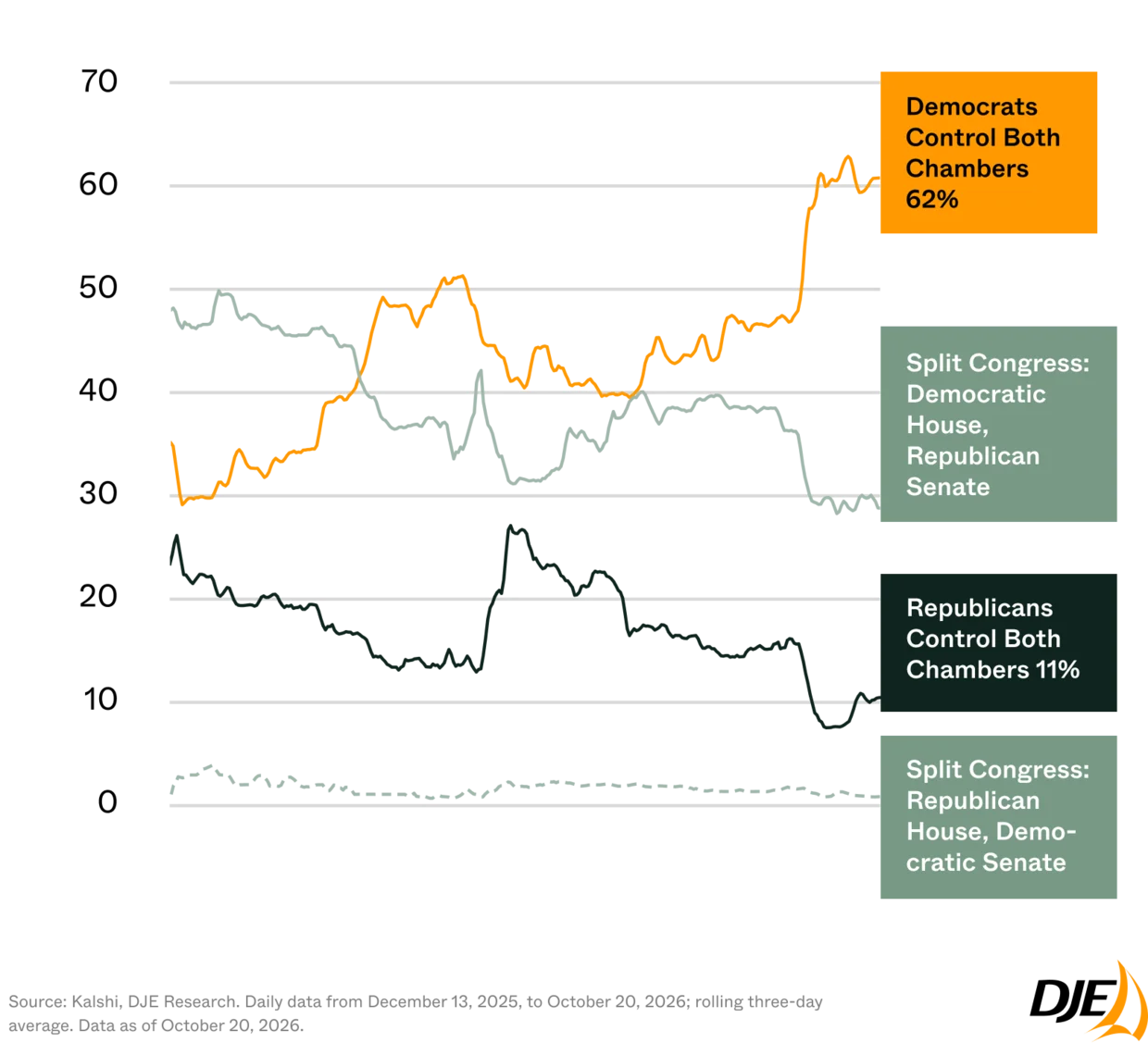
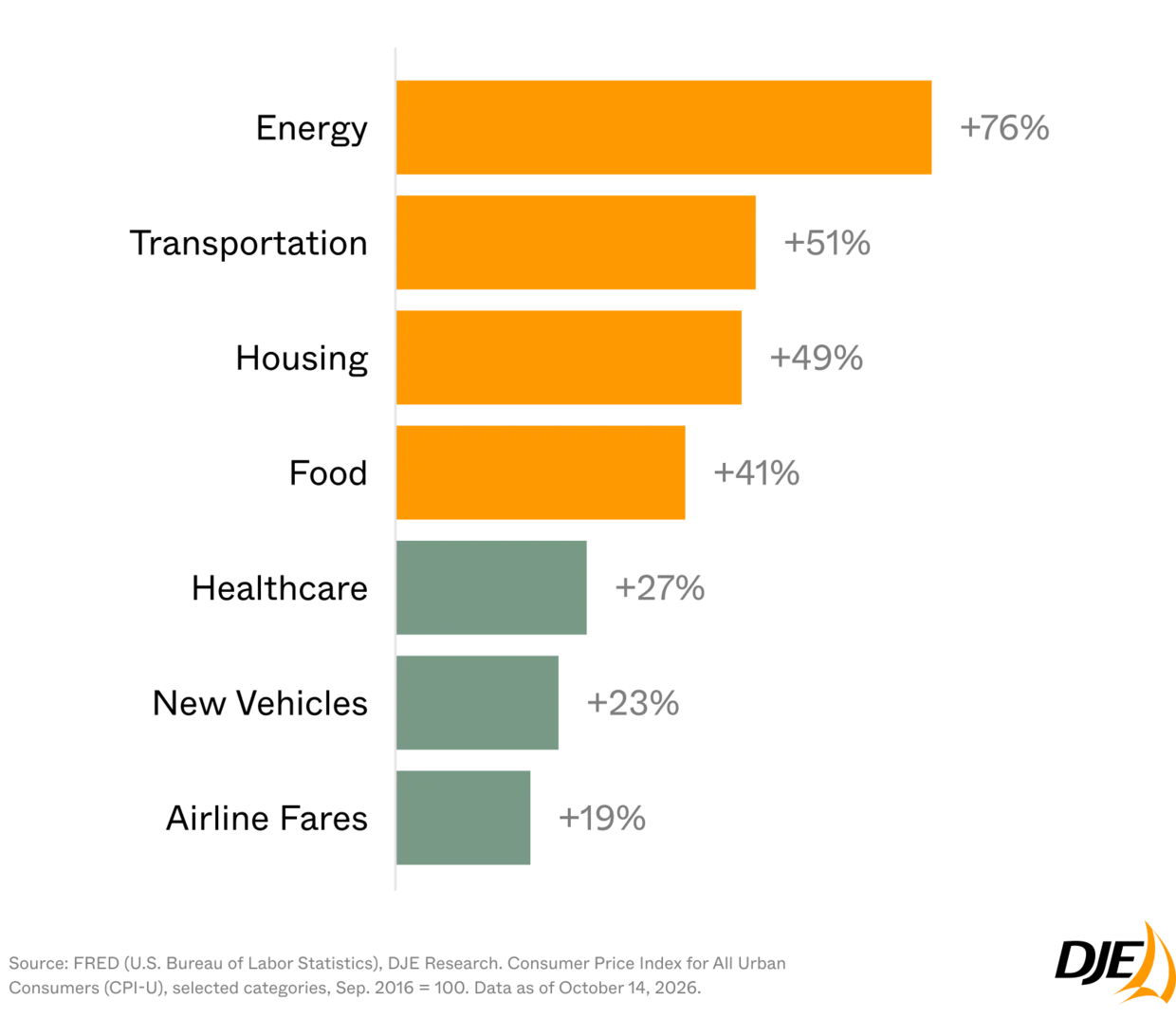
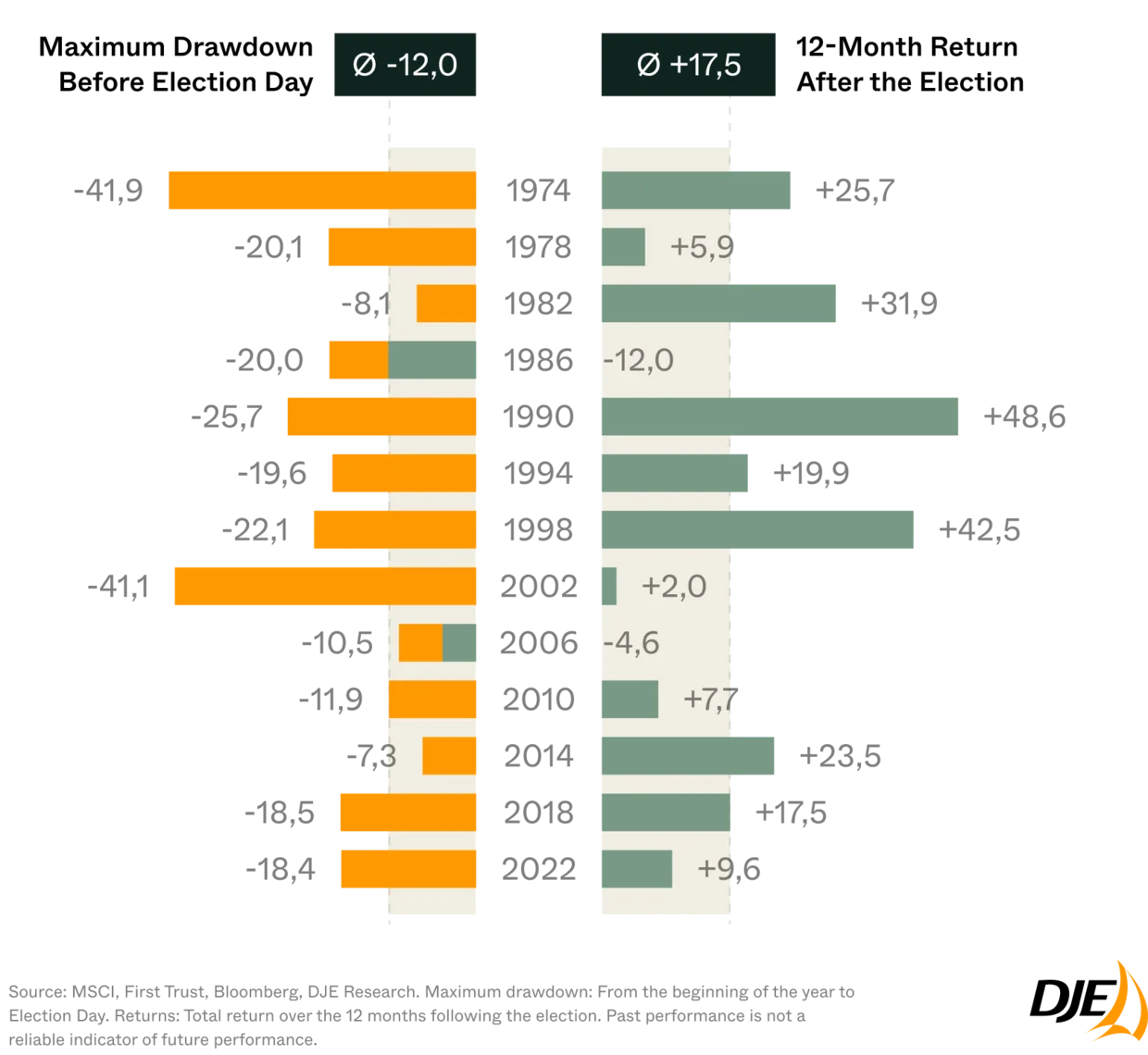
The 2026 midterm elections are approaching, and the affordability of everyday life remains a central concern for many US households. Investors may also find it instructive to look back at earlier election cycles: midterm years have often been turbulent on the equity markets, yet the twelve months following election day have historically tended to be considerably more benign. Betting odds have shifted markedly since the start of the year. In December 2025, the probability of a Democratic victory in both the House of Representatives and the Senate stood at just under 30 per cent; by mid-October 2026 it had risen to around 62 per cent. Over the same period, the likelihood of the Republicans securing a majority in both chambers fell from a little over 23 per cent to roughly 11 per cent. A Democratic sweep of both chambers would substantially curtail the President's room for political manoeuvre. Major legislation would become harder to pass, and conflict with Congress more likely. The second half of his term could therefore take on the character of a "lame duck" presidency at an early stage. Divided government frequently produces gridlock in Washington. For the markets, however, it can also be more predictable, as sweeping shifts in policy become less likely. The annual rate of inflation has eased considerably from the peaks of 2022 and 2023. For many households, though, the relief remains limited. The current inflation rate captures the pace at which prices are rising, but it says nothing about how far the overall price level has already climbed. Since September 2016, energy prices in the United States have risen by 76 per cent. Transport now costs 51 per cent more, housing 49 per cent and food 41 per cent. Even with annual inflation of around three per cent, everyday life is therefore markedly more expensive than it was a decade ago. This gap will be decisive in the election campaign. For many consumers, the question is not primarily whether the inflation rate is falling. What matters is the cost of rent, groceries, the car and energy at the end of the month. Midterm years have traditionally been among the more volatile periods on the stock market. Since 1974, the maximum drawdown of the MSCI USA between the start of the year and election day has averaged 12 per cent. In some election years the setbacks were far milder; in others they exceeded 30 per cent. The picture after the elections is considerably more encouraging. In the twelve months following the midterms, the MSCI USA has historically delivered an average return of 17.5 per cent. No forecast for 2026 can be derived from this, however. What the historical record does show is that political uncertainty and interim price declines are often simply part of the election cycle. This is why a longer investment horizon remains essential. Election campaigns and shifting majorities may cause short-term nervousness, but over the long run markets are driven above all by earnings, interest rates and valuations. This is a marketing advertisement. It is intended solely for information and marketing purposes. Democrats gaining ground
Lower inflation, high prices
First the dip, then the upswing?
The statements contained herein have been prepared with due care and to the best of our knowledge at the time of preparation, reflect the assessment of DJE Kapital AG at the time of publication and may change at any time. No guarantee is given as to the accuracy, completeness or timeliness of the information.
The information provided does not constitute individual investment advice, a personal recommendation or a binding offer to buy or sell financial instruments or to use a specific financial service.
DJE Kapital AG, Pullacher Straße 24, 82049 Pullach, Germany
Chart of the Month