

By Damian Reimertz, Analyst for the Industrial Goods and Services sector at DJE Kapital AG
Global energy demand is on a structural upward trend. Unlike in previous cycles, however, this increase is not primarily driven by economic growth or industrialization, but by changes in the way energy is produced and used. The focus is on three key drivers: advancing electrification, the expansion of AI data centers and the modernization of electricity grids for the use of renewable energies.
Short-term uncertainty, long-term growth in demand
However, the global energy market is currently caught between short-term geopolitical uncertainty and long-term structural growth in demand. The war between the USA and Iran and the ongoing war between Russia and Ukraine highlight the central role of energy as a geopolitical factor. Rising energy prices, disrupted supply chains and increasing uncertainty characterize the current environment and have a direct impact on industrial activity and investment decisions. These developments are also reflected in the latest economic indicators: although the purchasing managers' indices for March signal robust industrial activity in the USA, Germany and the eurozone at first glance, a closer look reveals a decline in the quality of demand. Much of the current momentum is being driven by inventory build-up ahead of potential supply chain disruptions, while new orders are losing momentum.
Nevertheless, while the indicators show a geopolitically strained industrial economy, the structural trend of rising energy demand remains intact. Electrification, AI data centers and renewable energies are long-term developments that will accompany us over the next few years. Since the start of the war in Iran, industrial shares have come under noticeable pressure, having risen significantly in the twelve months prior to the outbreak of the war at the end of February. Against this backdrop, the question for investors is how the current geopolitical uncertainty can be placed in the context of the structural growth issue of energy demand.
Electrification: from e-mobility and heat pumps to green steel
Electrification is one of the most important drivers of rising energy demand and describes the transition from fossil fuels such as oil, gas and coal to electrical energy. Sectors that were traditionally based on fossil fuels, in particular transportation, building heating and industrial processes, are increasingly being converted to electric solutions. The aim is decarbonization in order to reduce CO2 emissions and increase efficiency.
One prominent example is electromobility. Despite a slow start and concerns about an inadequate charging infrastructure and the mileage range of vehicles, this trend is gaining momentum. According to the Federal Motor Transport Authority, more electric vehicles than petrol cars were newly registered in Germany for the first time in March. According to a representative survey by mobile.de, 43% of respondents would like to switch to an electric drive given the current fuel prices. Electrification is also gaining importance in the building sector, for example through the increased use of heat pumps to replace fossil-based heating systems such as oil and gas heating. The electrification of industrial processes is also progressing, particularly in energy-intensive sectors. In steel production, for example, blast furnaces are being replaced by electric arc furnaces, while in the chemical and cement industries, fossil fuels are gradually being replaced by electric heat or hydrogen-based processes.
Overall, these developments are leading to a structural shift towards an electricity-based energy supply, with corresponding demand pressure on generation capacities and grid infrastructure. Suppliers of electrical equipment and automation such as Schneider Electric as well as companies along the electricity infrastructure and cable manufacturers are well positioned.
Data centers are becoming the electricity driver of digitalization
Another increasingly important factor in the rising demand for energy is the expansion of data centers. The digitalization of the economy, cloud computing and, in particular, the rapid progress in the field of artificial intelligence are leading to an exponential increase in the computing power required. AI data centers are extremely energy-intensive. In addition to the power required for the actual data processing, cooling also plays a key role. As AI applications become more widespread, the demands on data centers are increasing, which further increases the energy consumption per data center. Although energy efficiency and cooling requirements at chip level are continuously improving, this effect is more than offset by the sharp rise in data volumes and the increasing computing power required. The five largest hyperscalers could increase their investments in AI infrastructure to over USD 600 billion this year, which would correspond to growth of around 36% compared to 2025. The IEA is even forecasting a doubling of global data center power consumption between 2024 and 2030, which corresponds to average annual growth of around 15%.
The expansion of data centers plays into the hands of providers of power supply and cooling infrastructure, which provide critical systems for energy supply, backup and thermal management. In addition, providers of power distribution and physical infrastructure at rack level are also benefiting directly from the growing demand due to the expansion of server capacities.
Renewable energies are changing the power supply infrastructure
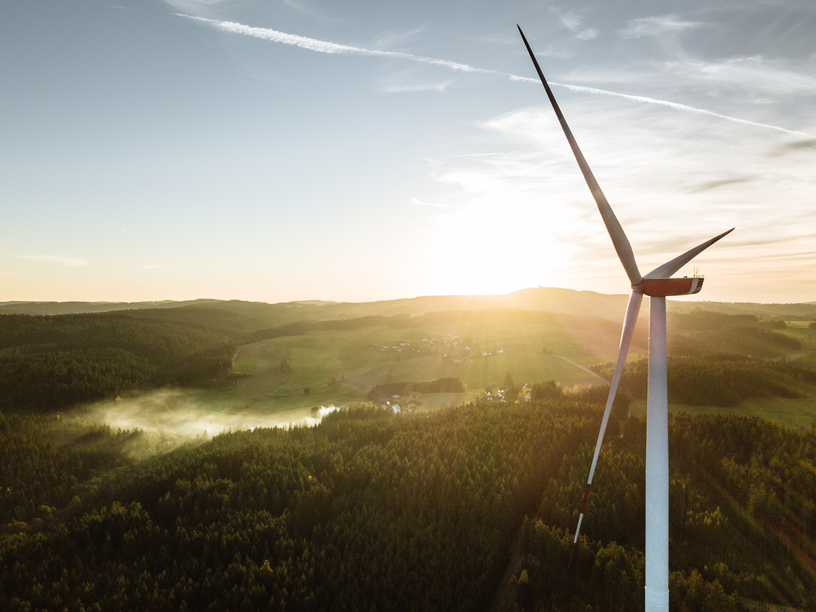
A fundamental transformation of energy generation is taking place in parallel with the increasing demand for energy. The expansion of renewable energies, particularly wind and solar energy, is a central component of the decarbonization strategy of many economies. According to IEA estimates, the share of renewable energies in the global electricity supply is likely to rise to around 50% by 2030 (currently 42%).
Geopolitical tensions, particularly the wars in Iran and Ukraine, are increasing the pressure on import-dependent economies to make their energy supply more resilient and independent. This makes renewable energies even more attractive, as they can be generated locally, operate largely independently of global supply chains once installed and are less susceptible to geopolitical risks and volatile commodity markets. However, renewable energies are volatile, as their generation is heavily dependent on weather conditions. This leads to new demands on the energy infrastructure. The expansion of electricity grids to transport renewable energy from production sites that are often located in remote regions, such as offshore wind farms, to consumption centers is of crucial importance. Energy storage is also becoming increasingly important. Numerous companies are positioned along the entire value chain: from wind turbine manufacturers and operators to grid technology providers and cable manufacturers, who play a key role in the transportation and integration of renewable energy.
Conclusion: Energy supply security continues to gain in importance
The direct impact of the war in Iran on industrial and infrastructure companies appears to be limited. According to UBS and company information, only a small proportion of sales - around 6 to 12 percent - is generated directly in the affected regions. Supply shortfalls and operational restrictions have therefore only played a minor role to date.
However, the indirect effects are much more relevant. The conflict is having an impact primarily through higher energy prices, rising transportation costs and increasing uncertainty along global supply chains. In particular, the restrictions on central trade routes, such as the Strait of Hormuz - one of the most important hubs for oil and gas transportation - are leading to noticeable distortions in the energy and commodity markets.
Overall, the short-term environment remains characterized by increased volatility and cyclical risks. At the same time, however, it is clear that the structural drivers of energy demand - electrification, data centers and renewable energies - are largely independent of these short-term fluctuations. The current geopolitical situation could even reinforce this trend by further emphasizing the importance of energy security, infrastructure investment and energy diversification.
Legal information
Marketing advertisement: All information published herein is for your information only and does not constitute investment advice or any other recommendation. The statements contained in this document reflect the current assessment of DJE Kapital AG. These may change at any time without prior notice. All statements made have been made with care in accordance with the state of knowledge at the time of preparation. However, no guarantee and no liability can be assumed for the correctness and completeness.